


Demoscene the AGA years digital version
9.00€
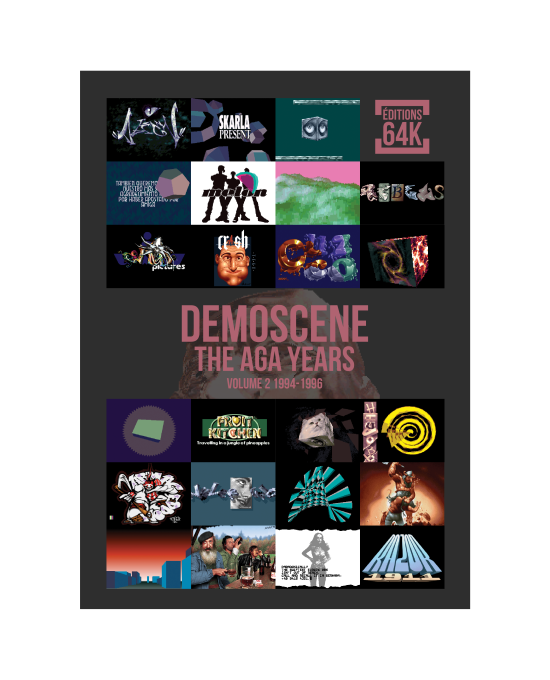
The Amiga Demoscene, from its inception, has always evolved with the times, and reinvented itself, always pushing the limits of Commodore’s flagship machine. From the Megademo, at the end of the 80s, to trackmos in the 90s, 1994 was the beginning of a new development for the Demoscene, with many demos released that used all the power of the Amiga 1200.
Alice, Lisa, Paula, Gayle and Budgie…
The Amiga 1200 was released in October 1992, and was the third generation of Amiga for the home market. Like its Amiga 500 brother, it was designed to be a single box solution, incorporating the keyboard, processor, chipset, floppy disk drive, expansion ports internal and external, and support for an internal hard disk. The 68020 processor running at 14MHz was supported by 2MB of memory, AmigaOS 3, and the new Amiga Advanced Graphics Architecture – AGA. Demoscene the AGA years digital version
9.00€
The Amiga Demoscene, from its inception, has always evolved with the times, and reinvented itself, always pushing the limits of Commodore’s flagship machine. From the Megademo, at the end of the 80s, to trackmos in the 90s, 1994 was the beginning of a new development for the Demoscene, with many demos released that used all the power of the Amiga 1200.
Alice, Lisa, Paula, Gayle and Budgie…
The Amiga 1200 was released in October 1992, and was the third generation of Amiga for the home market. Like its Amiga 500 brother, it was designed to be a single box solution, incorporating the keyboard, processor, chipset, floppy disk drive, expansion ports internal and external, and support for an internal hard disk. The 68020 processor running at 14MHz was supported by 2MB of memory, AmigaOS 3, and the new Amiga Advanced Graphics Architecture – AGA.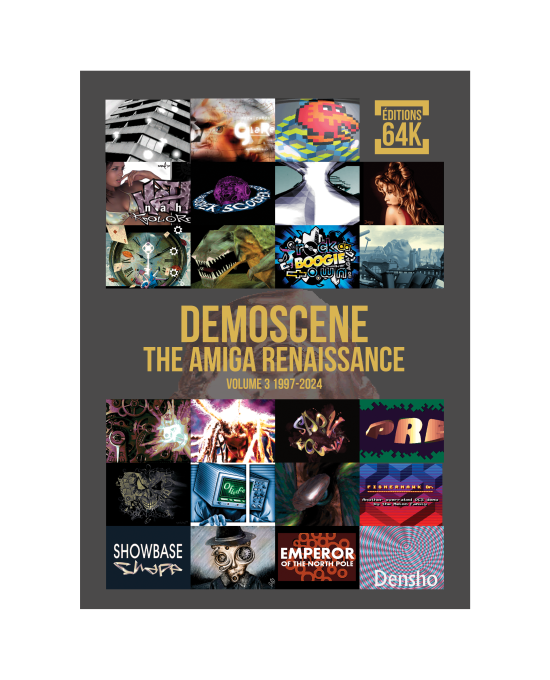
Demoscene the Amiga renaissance digital version
9.00€
Commodore filed for bankruptcy in 1994. One year later ESCOM, a PC manufacturer and chain of computer stores, bought what was left of the company. The elegance and efficiency of the Amiga architecture had finally been beaten by Moore’s law, and the PC: x86 processors, with supporting graphics and sound cards, were able to do way more than even the most powerful Amiga simply by having more transistors in their components, higher clock speeds, cheaper storage and better communication options. Sceners, gamers, and the public in general, were migrating to PCs. In the demoscene, Amiga 4 channel modules gave way to full scores composed and mixed on PC, taking way more space than the Amiga floppy could provide. Hand drawn low resolution graphics with indexed colour were stomped by 24 bit artwork created with Photoshop, or full 3D worlds with texture mapping, coupled with effects made possible by raw power that the Amiga simply could not conceive.
Those who remained faithful to the Amiga often tried to create similar 3D graphical spectaculars, requiring more and more hardware until the most powerful (and expensive) processor in Motorola’s 68k family was a requirement, along with lots of disk space to play back the fully sampled soundtrack… Were these Amiga demos?
In 1991, 2266 Amiga demos were released making up nearly 50% of all releases. By 2001, that figure was 170 – just under 10% of releases that year. Naturally demographics had a strong influence too, as the once-young sceners had to prioritise jobs, family and other commitments instead of slaving away to create their unique blend of art and science. For a decade, the Amiga – and indeed the overall demoscene – was moribund. The 53 Amiga releases in 2010 made up less than 5% of the total demoscene output. Computers had become just a business tool, and creating demos earned you nothing other than recognition from a subculture,
It seems all of Gaul the scene is entirely occupied by Romans PCs. Well, not entirely… One small village community of indomitable Gauls Amigans still holds out against the invaders.
Demoscene the Amiga renaissance digital version
9.00€
Commodore filed for bankruptcy in 1994. One year later ESCOM, a PC manufacturer and chain of computer stores, bought what was left of the company. The elegance and efficiency of the Amiga architecture had finally been beaten by Moore’s law, and the PC: x86 processors, with supporting graphics and sound cards, were able to do way more than even the most powerful Amiga simply by having more transistors in their components, higher clock speeds, cheaper storage and better communication options. Sceners, gamers, and the public in general, were migrating to PCs. In the demoscene, Amiga 4 channel modules gave way to full scores composed and mixed on PC, taking way more space than the Amiga floppy could provide. Hand drawn low resolution graphics with indexed colour were stomped by 24 bit artwork created with Photoshop, or full 3D worlds with texture mapping, coupled with effects made possible by raw power that the Amiga simply could not conceive.
Those who remained faithful to the Amiga often tried to create similar 3D graphical spectaculars, requiring more and more hardware until the most powerful (and expensive) processor in Motorola’s 68k family was a requirement, along with lots of disk space to play back the fully sampled soundtrack… Were these Amiga demos?
In 1991, 2266 Amiga demos were released making up nearly 50% of all releases. By 2001, that figure was 170 – just under 10% of releases that year. Naturally demographics had a strong influence too, as the once-young sceners had to prioritise jobs, family and other commitments instead of slaving away to create their unique blend of art and science. For a decade, the Amiga – and indeed the overall demoscene – was moribund. The 53 Amiga releases in 2010 made up less than 5% of the total demoscene output. Computers had become just a business tool, and creating demos earned you nothing other than recognition from a subculture,
It seems all of Gaul the scene is entirely occupied by Romans PCs. Well, not entirely… One small village community of indomitable Gauls Amigans still holds out against the invaders.

Demoscene the Amiga years digital version
9.00€
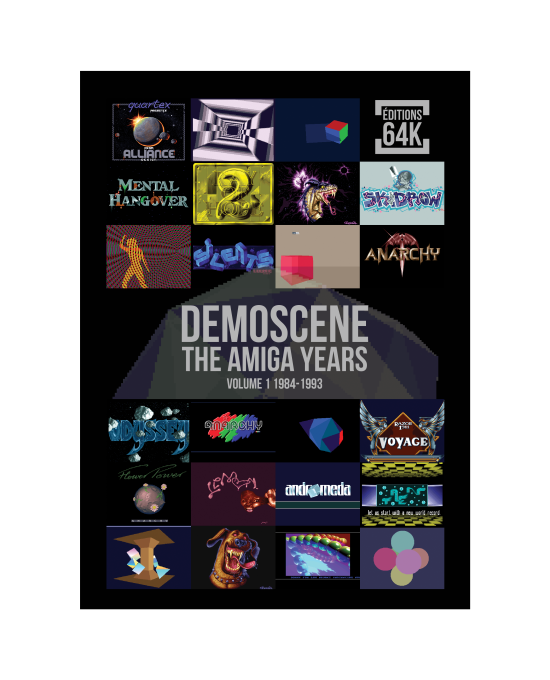
Demoscene the Amiga years reflects the making of the best demos as well as the history of the most emblematic and best known groups of the demoscene. Discover numerous pictures of demos through more than 450 pages as well as contributions of “sceners”. This book is the first volume covering the years 1984 to 1993 with about 90 demos amongst the most famous and popular ones. Discover the technical, graphical and musical evolution of the Amiga demos throughout the years, in Volume 1 (covering the period 1984-1993) with the most mythical ones of groups such as Kefrens, The Silents or Sanity.
After an history of the origin of demos and demoscene, start with the first demos including The Juggler and Boing then follow the Megademos period with RSI – Alcatraz – Kefrens – Rebels. The first slideshow with J.O.E (Scoopex / Red Sector Inc.). The creation and history of Rebels group by one of its founder Static, the first Trackmo with Mental Hangover from Scoopex which will change the style of demos in the early 90s and the history of this group from 1988 until in 2000. An other surprise like Budbrain productions which won 1st place at Amiga conference in 1990 with its megademo which will repeat with Budbrain Megademo 2 and the feeling of Diablo one of members. Without forgetting Anarchy with the participation of some of its members such as Dan, 4-Mat or Facet, and Razor 1911 with its demo Voyage.
The Norwegians of Pure metal coder with their demo Alpha and Omega. Go to Hungary with the group Majic 12 and its Ray of Hope demo who will explain the conditions in which this demo was created. PGCS will tell you the story of the Odyssey demo and its 5 disks, an intergalactic epic that will take you to another demo called Hardwired, a The Silents/Crionics production and the contribution of Jesper Kyd, Mikael Balle and Murphy.
Demoscene the Amiga years digital version
9.00€
Demoscene the Amiga years reflects the making of the best demos as well as the history of the most emblematic and best known groups of the demoscene. Discover numerous pictures of demos through more than 450 pages as well as contributions of “sceners”. This book is the first volume covering the years 1984 to 1993 with about 90 demos amongst the most famous and popular ones. Discover the technical, graphical and musical evolution of the Amiga demos throughout the years, in Volume 1 (covering the period 1984-1993) with the most mythical ones of groups such as Kefrens, The Silents or Sanity.
After an history of the origin of demos and demoscene, start with the first demos including The Juggler and Boing then follow the Megademos period with RSI – Alcatraz – Kefrens – Rebels. The first slideshow with J.O.E (Scoopex / Red Sector Inc.). The creation and history of Rebels group by one of its founder Static, the first Trackmo with Mental Hangover from Scoopex which will change the style of demos in the early 90s and the history of this group from 1988 until in 2000. An other surprise like Budbrain productions which won 1st place at Amiga conference in 1990 with its megademo which will repeat with Budbrain Megademo 2 and the feeling of Diablo one of members. Without forgetting Anarchy with the participation of some of its members such as Dan, 4-Mat or Facet, and Razor 1911 with its demo Voyage.
The Norwegians of Pure metal coder with their demo Alpha and Omega. Go to Hungary with the group Majic 12 and its Ray of Hope demo who will explain the conditions in which this demo was created. PGCS will tell you the story of the Odyssey demo and its 5 disks, an intergalactic epic that will take you to another demo called Hardwired, a The Silents/Crionics production and the contribution of Jesper Kyd, Mikael Balle and Murphy.
Demoscene the logo art digital version
9.00€
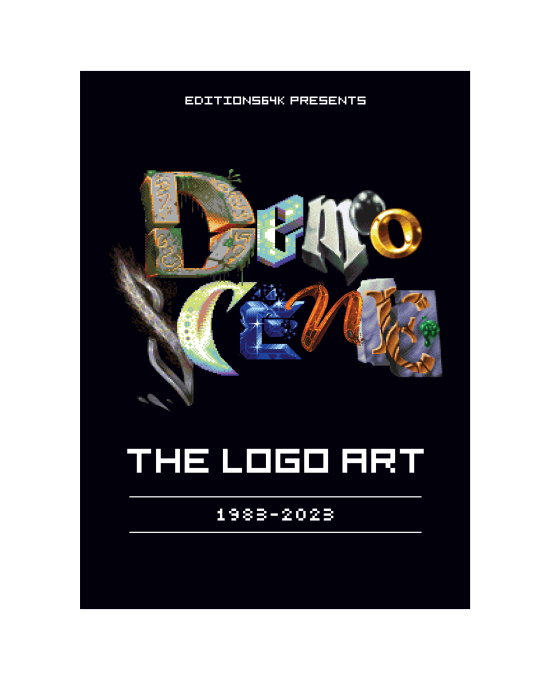
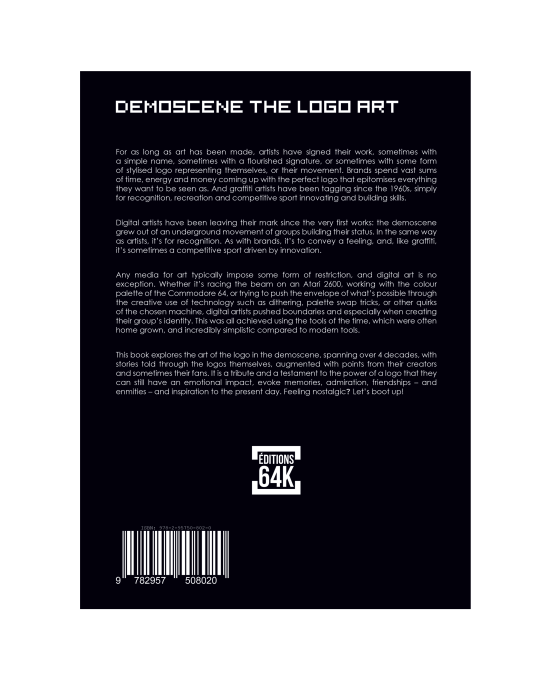
Demoscene: the Logo Art is the first book dedicated to logos and their creators for all demoscenes (Amstrad, Amiga, Atari, Commodore 64, PC, Pico 8, NES, SNES, PS2, etc…). Find hundreds of logos and exclusive content about the people who created them. Through its 400 pages you will discover more than 30 years of logo history within the demoscene.
Demoscene the logo art digital version
9.00€
Demoscene: the Logo Art is the first book dedicated to logos and their creators for all demoscenes (Amstrad, Amiga, Atari, Commodore 64, PC, Pico 8, NES, SNES, PS2, etc…). Find hundreds of logos and exclusive content about the people who created them. Through its 400 pages you will discover more than 30 years of logo history within the demoscene.
Psygnosis Games People Play Tome 1 digital version
10.00€
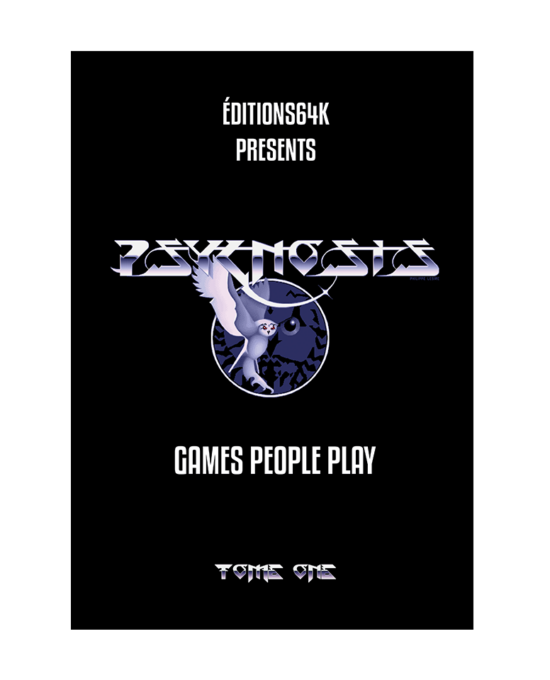
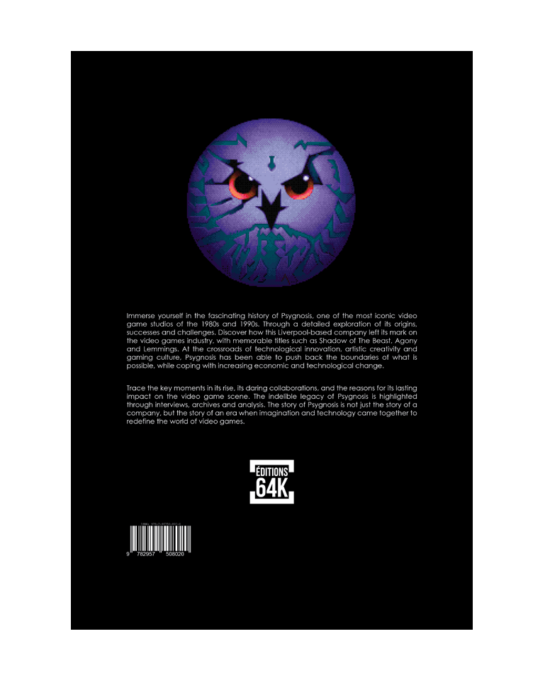
Immerse yourself in the fascinating history of Psygnosis, one of the most iconic video game studios of the 1980s and 1990s. Through a detailed exploration of its origins, successes and challenges. Discover how this Liverpool-based company left its mark on the video games industry, with memorable titles such as Shadow of The Beast, Agony and Lemmings. At the crossroads of technological innovation, artistic creativity and gaming culture, Psygnosis has been able to push back the boundaries of what is possible, while coping with increasing economic and technological change.
Trace the key moments in its rise, its daring collaborations, and the reasons for its lasting impact on the video game scene. The indelible legacy of Psygnosis is highlighted through interviews, archives and analysis. The story of Psygnosis is not just the story of a company, but the story of an era when imagination and technology came together to redefine the world of video games.
Psygnosis, the story of a visionary studio
Psygnosis, a name that sounds like a legend in the history of video games, has left an indelible mark on the games industry. Founded in Liverpool in 1985, this British studio is responsible for some of the most innovative and influential productions of its time. A look back at the contributions that have enabled Psygnosis to shape the future of video games with iconic titles, groundbreaking graphics and a creative approach that has redefined industry standards.
Psygnosis Games People Play Tome 1 digital version
10.00€
Immerse yourself in the fascinating history of Psygnosis, one of the most iconic video game studios of the 1980s and 1990s. Through a detailed exploration of its origins, successes and challenges. Discover how this Liverpool-based company left its mark on the video games industry, with memorable titles such as Shadow of The Beast, Agony and Lemmings. At the crossroads of technological innovation, artistic creativity and gaming culture, Psygnosis has been able to push back the boundaries of what is possible, while coping with increasing economic and technological change.
Trace the key moments in its rise, its daring collaborations, and the reasons for its lasting impact on the video game scene. The indelible legacy of Psygnosis is highlighted through interviews, archives and analysis. The story of Psygnosis is not just the story of a company, but the story of an era when imagination and technology came together to redefine the world of video games.
Psygnosis, the story of a visionary studio
Psygnosis, a name that sounds like a legend in the history of video games, has left an indelible mark on the games industry. Founded in Liverpool in 1985, this British studio is responsible for some of the most innovative and influential productions of its time. A look back at the contributions that have enabled Psygnosis to shape the future of video games with iconic titles, groundbreaking graphics and a creative approach that has redefined industry standards.